




Updated July 2026
You’re a dog-lover through and through. Your bestie is spoiled (but obviously not rotten), and you dote on your fur-baby shamelessly. But do you know proper dog skin care? Well, we’re here to help you out with the top 5 dog skin care tips.
1. Choose a Bathing Schedule That Fits Your Dog

While “bath” might not be your dog’s favorite word, regular bathing can be part of a healthy skin and coat routine. How often your dog needs a bath depends on their coat type, activity level, environment, and skin health. Some dogs may need more frequent bathing, while others can go longer between baths. Ask your veterinarian or groomer what schedule and products are appropriate for your dog.
Choose shampoo and conditioner specifically formulated for dogs. Human products may not be appropriate for dog skin and can contribute to dryness or irritation. Look for dog-safe formulas suited to your dog’s coat and skin needs, and ask your veterinarian about medicated products if your dog has an existing skin condition
Once your dog is dry, gently brush through their coat to help prevent tangles. Don't forget it’s acceptable to let your pet have a victory lap or two around the house first to celebrate their freedom from the washtub!
2. Brush Based on Your Dog's Coat Type

Proper brushing is an essential part of dog care. Not only will regular brushing help work through knots and tangles, but it also helps distribute the natural oils, which help keep his or her coat and skin healthy and clean.
Brushing needs vary by coat type, length, shedding pattern, and skin condition. Long, curly, or easily tangled coats may need frequent brushing, while shorter coats may require less. Use a brush suited to your dog’s coat and ask a groomer or veterinarian for guidance if you are unsure.
Make sure you use a brush designed for your dog’s coat and skin that won’t aggravate their skin and brush in the same direction of your pet’s hair to avoid irritation.
3. Watch for Itching, Hair Loss, and Skin Changes

Is your dog itching or scratching excessively or suffering from hair loss? They might be suffering from parasites, hot spots, or allergies.
First, try to determine if your little bestie is suffering from parasites or hot spots. Dogs regularly pick up bugs like ticks and fleas. You can look for them by running your fingers over their coat in multiple places like behind their ears, in their paws, and near their tail and belly.
If you notice insects, unusual debris, lumps, redness, or irritation, contact your veterinarian. In addition, you should check for hot spots, which can occur anywhere on the body. If you see a red, raw spot on your pet, then you might’ve found a hot spot. Look for excessive licking and biting around a particular area and, Signs may include repeated licking or biting, redness, moisture, hair loss, or sores around the affected area. Contact your veterinarian if you notice persistent scratching, hair loss, redness, sores, or a moist, irritated area. Avoid applying new topical products to broken or inflamed skin unless your veterinarian recommends them.
4. Support Skin and Coat Through Nutrition

Healthy skin and coat starts with a healthy diet. It sounds like a cliché, but it’s true. If your pup is not getting enough proper nutrients in his or her food, then coat health will suffer too.
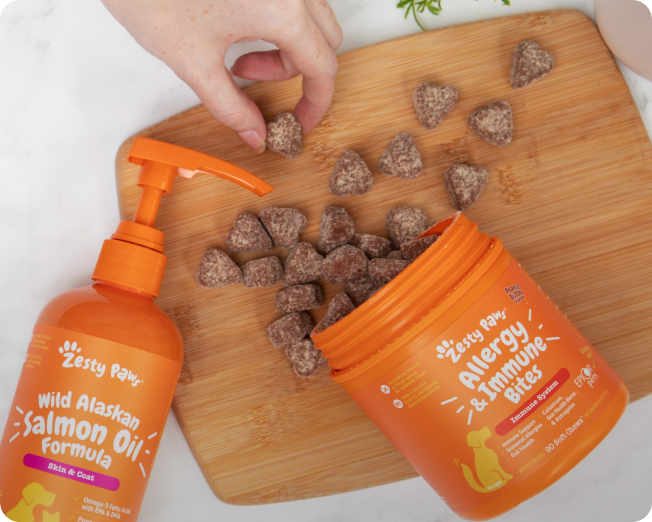
Protein, essential fatty acids, vitamins, and minerals all contribute to normal skin and coat health. Start with a complete and balanced food appropriate for your dog’s age and needs. The omega-3s in fatty acids are especially important for skin and coat health. Omega-3 fatty acids can help support normal skin function and a healthy coat as part of a complete, balanced diet. They also keep skin from drying out. If your veterinarian recommends additional fatty-acid support, Wild Alaskan Salmon Oil may fit into your dog’s feeding routine.
5. Keep Up With Veterinary Checkups

A vet can also recommend diet changes and give supplement advice to help your dog stay as happy and healthy as he or she can possibly be. Wagging tails are what we live to see.
Keep up with routine veterinary exams based on your dog’s age, health, and your veterinarian’s recommended schedule. Puppies, senior dogs, and dogs with ongoing skin concerns may need more frequent visits.
Your dog’s skin and coat can offer useful clues about their everyday care needs. Keep bathing and brushing routines suited to their coat, start with complete and balanced nutrition, and contact your veterinarian when itching, redness, hair loss, or other changes persist.
Looking for additional support? Explore Zesty Paws Skin & Coat options or take the quiz to find a routine that fits your dog.




4 comments
Zesty Paws
Hi there, Teresa! We would love to help your sweet little chorkie out with his skin issues in any way that we can. <3 We have alternatives to our soft chews, like our Salmon Oil and our Coconut Oil! These are both just oils that your pup can lick up and they will help his skin. :)
We also have a 100% satisfaction guarantee backing all purchases made through us, so we can always help you out if you’re not completely happy with the results!
Hi there, Teresa! We would love to help your sweet little chorkie out with his skin issues in any way that we can. <3 We have alternatives to our soft chews, like our Salmon Oil and our Coconut Oil! These are both just oils that your pup can lick up and they will help his skin. :)
We also have a 100% satisfaction guarantee backing all purchases made through us, so we can always help you out if you’re not completely happy with the results!
Teresa Oppman
I signed up to get emails/treats…he cannot eat hard treats, has no teeth. Also, I know he has allergy to fleas. He normally takes sympirica. I am looking to do what that does more homeopathic. Maybe some vitamins too. He is a chorkie.
I signed up to get emails/treats…he cannot eat hard treats, has no teeth. Also, I know he has allergy to fleas. He normally takes sympirica. I am looking to do what that does more homeopathic. Maybe some vitamins too. He is a chorkie.
Alex
Been using this coconut oil for about 3-4 months now and wow has it completely changed my pups overall demeanor. He used to have the worst hot spots that would get dried out and infected but after using this his skin is back to normal and so is he!
Been using this coconut oil for about 3-4 months now and wow has it completely changed my pups overall demeanor. He used to have the worst hot spots that would get dried out and infected but after using this his skin is back to normal and so is he!
Jenny
Thanks so much for this! I started using coconut oil about a week ago and it’s worked wonders on my little puppy girl.
Thanks so much for this! I started using coconut oil about a week ago and it’s worked wonders on my little puppy girl.