





Somewhere between the wary first sniff and the shared afternoon nap on the good couch cushion, something shifted. You didn't plan a friendship. You just kept noticing your dog waiting by the door for your feline bestie, or your cat claiming the exact spot your dog just vacated, still warm.
That unlikely bond is worth celebrating. It's also a good excuse for pet parents to ask: is your cat's world getting the same care and attention your dog's is?
Fight Like Cats and Dogs? Not Always.
The phrase "fight like cats and dogs" makes for a good punchline, not a good prediction. Real households run the full spectrum. Some pairs wrestle and chase, some settle for parallel napping, and some just tolerate a shared room with mutual indifference. All three count as success.
Where a pair lands often depends less on the species combination and more on the individual animals, their histories, and how they were introduced. Some dogs are eager to engage right away, while many cats prefer time to observe first.
Getting Your Home Ready for Cats and Dogs
Before you bring cats and dogs together for the first time, a little preparation goes a long way. A few things worth having in place ahead of time:
-
Set up an escape route. Make sure both animals have a clear, easy way to leave the room or situation, so neither ever feels cornered.
-
Stock up on treats and rewards. Positive reinforcement can help you reinforce calm behavior the moment it happens, not scrambling to find something afterward.
-
Plan to have someone on watch. Early interactions should always be supervised, so plan introductions for times when someone can stay present and step in if needed.
-
Map out a gradual schedule in advance. Decide ahead of time how you'll start with short sessions and slowly increase their length, rather than figuring it out on the fly.
-
Learn to read body language ahead of time. Get familiar with the signs of stress in both cats and dogs, like flattened ears or a tucked tail, so you can recognize them quickly once introductions begin.
That groundwork can help set the tone once introductions begin. From there, let the more cautious animal set the pace, not the calendar.
What Your Cat Needs in a Dog Household
Dog routines tend to be loud and visible: walks, training, mealtime rituals. Cat needs are quieter, which makes them easy to under-serve. Here's what shouldn't get skipped:
-
Vertical territory. Cat trees, shelves, and window perches let your feline bestie watch the room from a spot that feels safe.
-
A separate space the dog can't reach. Baby gates or a vertical barrier work well here, giving your cat a room or zone that's simply off-limits to the dog.
-
Resources with no competition. Food, water, litter box, and resting spots positioned so your cat never has to cross the dog's path to use them.
-
Real enrichment. Wand toys, scratching posts, and puzzle feeders help a cat feel like themselves in a house that isn't built around them.
This matters even more in homes with multiple dogs, where your cat may need more than one quiet route through the house.
What Your Dog Needs in a Cat Household
It's easy to assume the dog's needs are already covered, since dog routines tend to be the more visible ones in a shared home. But living alongside a cat comes with its own list of needs that are worth paying attention to as well:
-
Consistent structure. Dogs tend to do best with a predictable routine, and adding a cat to the household shouldn't mean walks, meals, or playtime get pushed aside.
-
A way to retreat from a startled cat. A surprised or annoyed cat may swat or scratch, so make sure your dog has somewhere to back off to if a cat needs space, especially with smaller or more sensitive dogs.
-
Enough physical and mental outlets. A dog that isn't getting enough exercise or stimulation elsewhere may fixate on the cat simply because it's the most interesting thing moving in the house.
-
Reinforcement for calm behavior specifically. Reward your dog for being gentle and relaxed around the cat, not just for leaving the cat alone entirely.
-
Patience while they adjust. A dog that's used to being the only pet may need time to get comfortable sharing space, attention, and territory.
When both animals' needs are actually being met, the relationship has a much better shot at becoming the kind of friendship worth celebrating.
Keeping the Peace in a Multi-Pet Household
Peace here isn't about forcing closeness. It's about giving every animal enough space and routine to make their own choices.
Start with food. Feed dogs and cats in separate areas so neither pet crowds the other's bowl, and nobody free-feeds on a diet formulated for a different species. Stagger resting spots across different heights so your cat always has somewhere to retreat.
Watch for shifts in behavior. Cats can show signs of stress through hiding, eating less, avoiding rooms they used to spend time in, or grooming that's gone from routine to relentless.
Dogs tend to show it differently: more pacing or whining, guarding food or favorite resting spots, increased barking, or a noticeable drop in appetite are all worth paying attention to as well. Neither set of changes is automatically about the other pet, and they're not something to guess your way through on your own. If a change is sudden or sticks around, that's a conversation for your veterinarian.
When Extra Calming Support Might Help
Getting the environment right (space, routine, resources, a slow introduction) is the foundation, and no product replaces it. But for occasional high-stress moments, like a storm, fireworks, houseguests, or a trip to the vet, some pet parents look for a little extra support alongside that routine.
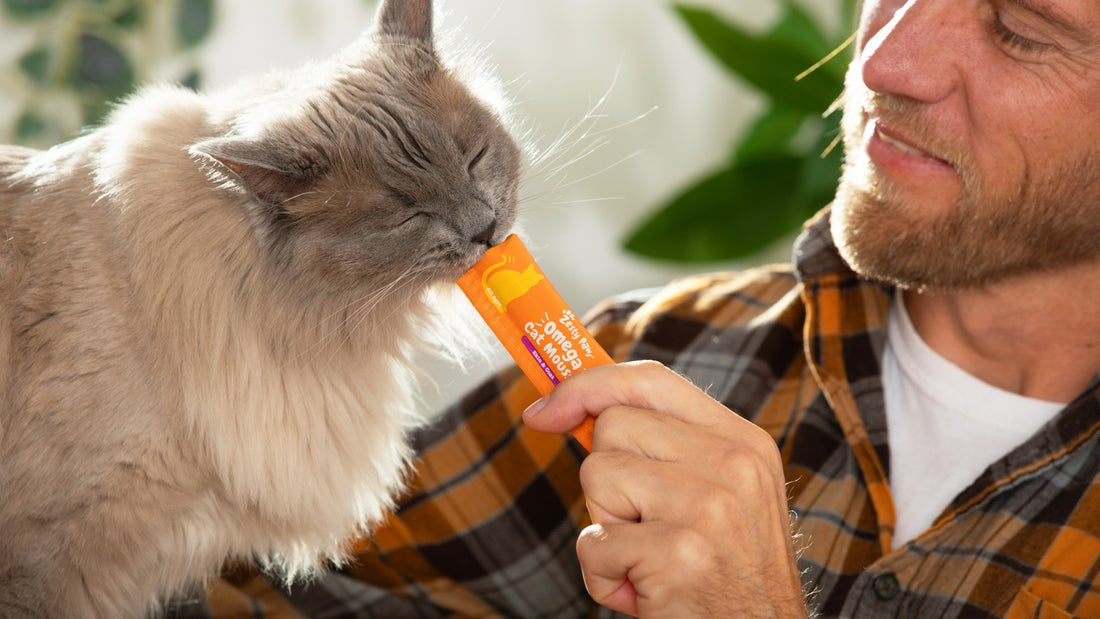
Our Calming Cat Mousse is a lickable option formulated with Suntheanine® L-theanine, ashwagandha, L-tryptophan, valerian root, and vitamin B1, designed to fit into a calming routine rather than replace it. As always, introduce one new product at a time, follow current label directions, and check with your veterinarian first if your cat is on medication, a prescribed diet, or managing a diagnosed condition.
For everyday environmental support, rather than just occasional stress, some pet parents also add a plug-in option to the mix. Our Cat Calming Diffuser Starter Kit uses synthetic feline facial pheromone F3 to add a familiar signal to the room your cat spends the most time in. It's not a fit for every routine, so read more on how it works and where it fits before deciding if it's right for your feline bestie.
Your Happy Cat Month Checklist
Treat this as a reset, not a full overhaul. This works whether you're in a single-cat home or a busier pet household:
-
Confirm your cat has a separate space to retreat to
-
Check that food, water, and litter box are easy for your cat to reach without competition
-
Rotate in a new enrichment toy, scratching surface, or puzzle feeder
-
Review grooming needs against your cat's coat type
-
Book a vet check-in if one's overdue or you've noticed a change
-
Review any supplements against your cat's current diet, meds, and needs
Give Happy Cat Month a Zesty Start
Your dog might be the reason your feline bestie gets more exercise and a permanent claim on the highest chair in the house. Your cat might be the reason your dog has learned that not everything wants to play, and that's fine too.
However their friendship looks, it holds up best when both pets get routines built around who they actually are. This Happy Cat Month, give the friendship its due, and give your cat's side of it the same attention the dog's side has probably already been getting.