

Gut health gets a lot of attention in human wellness circles these days, and it turns out the same basic idea applies to your dog. Understanding what supports dog gut health day to day starts with knowing what a healthy gut does: it plays a role in immune function, nutrient absorption, and even your dog's energy and mood, not just digestion.
Once you understand the basics of dog digestive health, it becomes much easier to spot when something's off, and what to do about it.
Why Gut Health Matters for Your Dog
Your dog's gut is home to trillions of bacteria, and a large share of the immune system lives right alongside them in the digestive tract. When that internal balance is working well, your dog typically absorbs nutrients efficiently, maintains regular digestion, and has the immune support to handle everyday exposure to the world.
When that balance gets disrupted, the effects aren't always limited to the stomach. A dog with an unbalanced gut may show it through digestive changes, skin and coat changes, or even energy levels, since gut health influences so much of the body at once.
What Causes an Unhealthy Gut in Dogs?
A dog's gut balance can be disrupted by more than just what's in the food bowl. Common contributors include:
-
Antibiotics: Necessary when your dog is sick, but antibiotics don't distinguish between harmful bacteria and the beneficial kind, which can leave gut balance disrupted afterward.
-
Sudden diet changes: Switching foods too quickly, rather than gradually, is one of the most common triggers of short-term digestive upset.
-
Stress: Travel, boarding, a new pet in the house, or other disruptions to routine can affect a dog's digestion just as they can affect ours.
-
Low-fiber diets: Fiber feeds the beneficial bacteria in your dog's gut. A diet that's consistently low in it can make it harder for that bacterial balance to stay stable.
Identifying the actual cause matters, since a stress-related issue and a diet-related one call for different fixes.
Diet as the Foundation
Sometimes, yes. Diet is the foundation of gut health, not an afterthought to it. A complete and balanced diet with quality protein, appropriate fiber, and consistent feeding habits addresses a large share of mild digestive issues on its own. Keeping your dog well hydrated matters here too, since water plays a direct role in healthy digestion.
For more persistent or recurring issues, diet alone may not be enough. That's where a supplement can come in, not as a replacement for a good diet, but as a complement to it, filling gaps that food alone doesn't always cover.
How Long Does It Take to Improve a Dog's Gut Health?
If you're wondering how to improve dog gut health on a realistic timeline, the honest answer is that it varies. There is no set schedule, and how long it takes depends on many factors, including your dog's diet, hydration, stress levels, age, and what is behind the imbalance in the first place.
Some dogs show early changes, like steadier stool or a more consistent appetite, within a week or two of a diet change or added support. For others it takes several weeks or longer, and changes in energy or coat condition, when they happen, often take more time.
Because the gut's bacterial balance can take time to reestablish, changes are usually gradual rather than immediate, and improvement isn't guaranteed for every dog.
If you don't see improvement after several weeks of consistent effort, or your dog's symptoms are getting worse, loop in your veterinarian rather than continuing to troubleshoot on your own.
Frequently Asked Questions
What are the signs of poor gut health in dogs?
Common signs include loose stool, excess gas, low energy, a dull coat, and unexplained itching. Any one of these can have other causes too, so it's the pattern that matters most, not a single symptom. If you're noticing several at once, our guide on common dog behaviors covers a few gut-related habits, like stool eating, in more detail.
What causes an unhealthy gut in dogs?
Antibiotics, sudden diet changes, stress, and low-fiber diets are among the most common triggers behind an unhealthy gut. Antibiotics can clear out beneficial bacteria along with harmful ones, while low-fiber diets make it harder for that balance to rebuild. Identifying the actual cause helps determine the right fix.
Can diet alone fix gut health issues?
For mild, occasional digestive upset, often yes. A complete and balanced diet with adequate fiber and hydration resolves a lot on its own. For more persistent issues, diet is still the foundation, but a supplement may help fill in the gaps.
How long does it take to improve a dog's gut health?
There is no set timeline, since it depends on your dog's diet, hydration, stress levels, age, and the underlying cause. Some dogs show early changes, like steadier stool, within a week or two of a diet change or added support, while others take several weeks or longer. Improvement isn't guaranteed, so talk with your veterinarian if symptoms persist.
Do probiotics actually help dogs with gut problems?
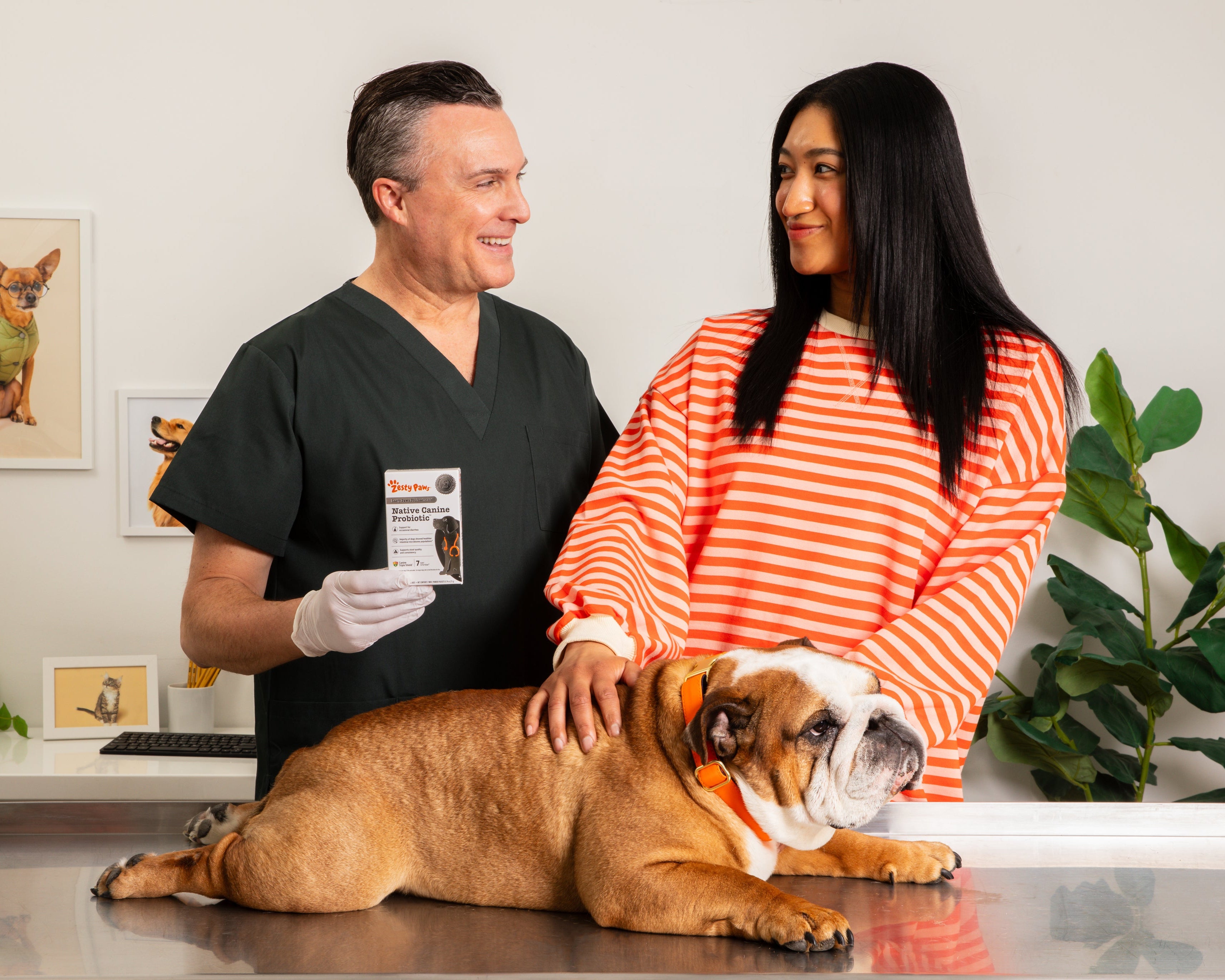
Yes, for many dogs, probiotics can help support and restore healthy bacterial balance, especially after antibiotics, stress, or a diet change. They work best alongside a balanced diet, not in place of one. Our guide to dog probiotics covers how they work and what to look for, including our Probiotic Bites.
When should I talk to my vet about my dog's digestive health?
Reach out to your veterinarian if symptoms are severe, sudden, or don't improve after a few weeks of consistent diet and routine adjustments. Vomiting, blood in the stool, significant weight loss, or a dog that stops eating altogether are all reasons to skip the wait-and-see approach and call sooner rather than later.
Give Your Dog's Gut the Support It Deserves
Gut health isn't a single fix. It's an ongoing balance between diet, routine, and, for some dogs, a little extra support. Start with the basics: a complete and balanced diet, consistent feeding habits, and attention to how your dog is actually doing day to day. From there, explore our Gut Health collection, or take the quiz to find what fits your bestie's routine.